Anger is the indicator that something is wrong.
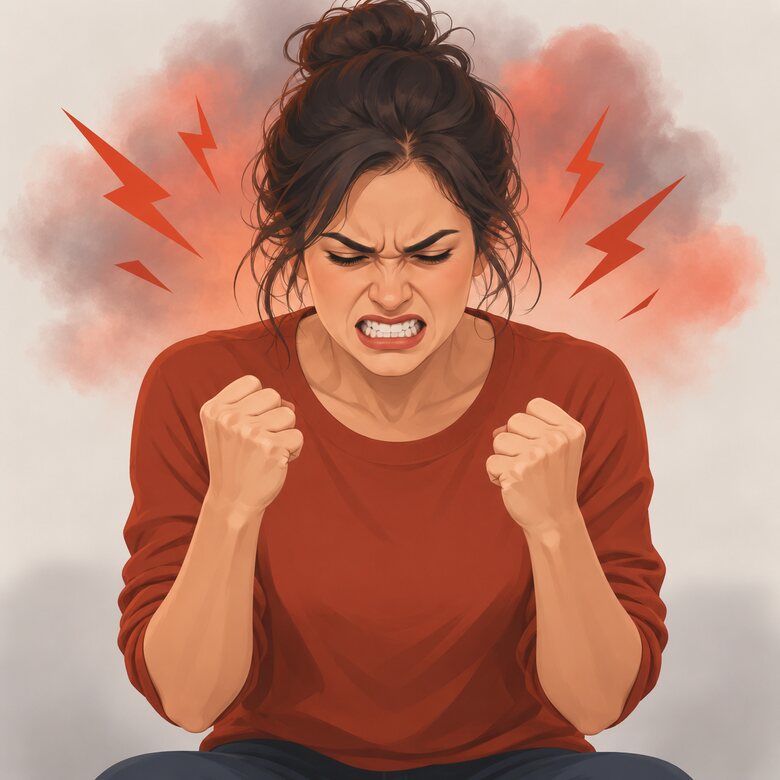
Not wrong in a temperamental, "I don't like this" way. Wrong in a values way. Unjust. Unfair. Unethical. A line crossed. A boundary violated. Someone hurt when they shouldn't have been. Something taken that shouldn't have been taken. You, or someone you care about, or something you care about, has been treated in a way you'd never treat someone yourself.
This is why anger sits at a moral coordinate in the psyche. It is the alarm bell that goes off when your sense of what's right has been struck. If a person tells me they haven't been angry in a long time, my next question is usually: have you been paying attention? Because the world gives us a steady diet of things worth being angry about. Someone who feels no anger at any of it is often someone who has quietly disconnected from the part of themselves that keeps score.
Anger has a spectrum. Irritation is anger reading low. Rage is anger reading high. Both are the same indicator; they are just measuring different magnitudes of the same thing, the size of the wrong. If you find yourself furious over something you think is trivial, one possibility worth considering is that it isn't trivial. The trivial version was the trigger. The reading is telling you about something deeper: an old wound, a repeat pattern, a value that's been getting stepped on for a long time.
The mistake most of us were taught: anger is bad, or dangerous, or ugly. It isn't. Anger acted on impulsively can be all of those things. But the emotion itself is a moral instrument. You need to be able to feel it. It is how you locate what shouldn't have happened.
Anger is not the enemy. It is a reading: something here is wrong, and part of you is still keeping score. That is worth listening to.